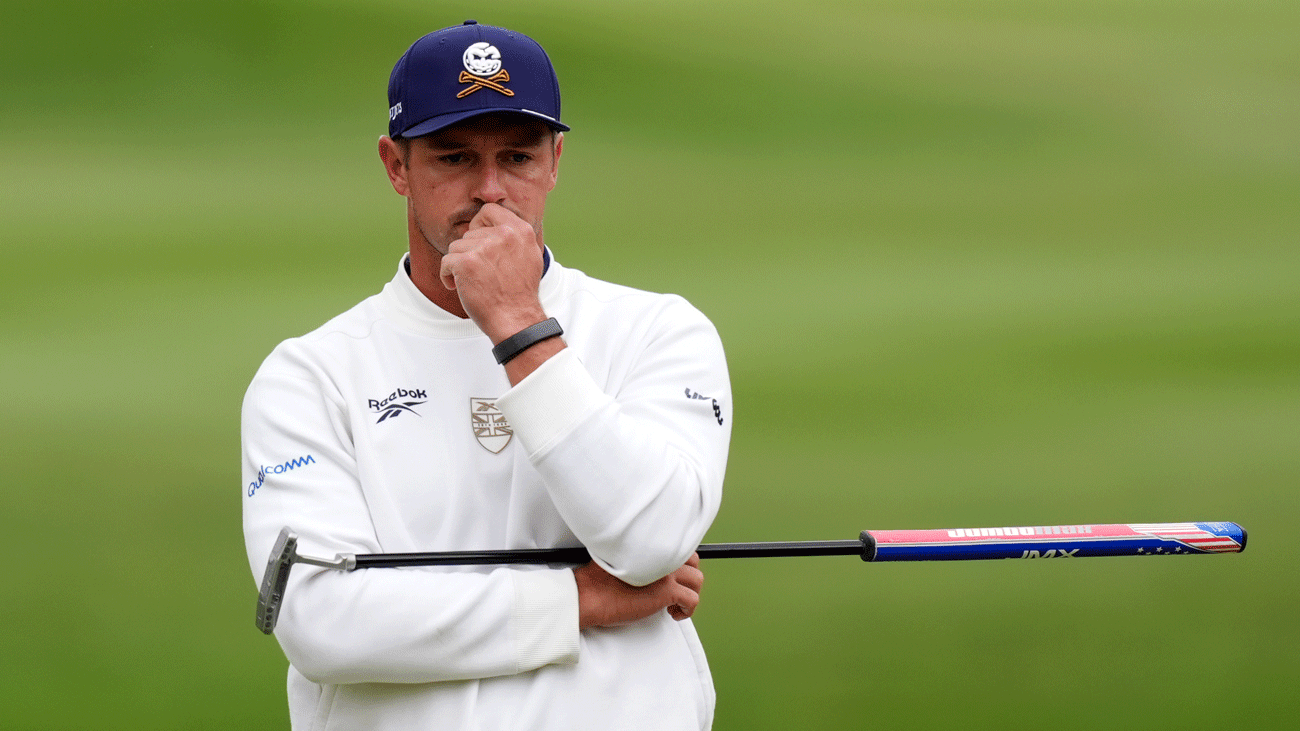
If you’ve lost track of the LIV news cycle, I can’t blame you. It’s been messy, painstaking and littered with misdirection.
So let me catch you up on everything you need to know.
LIV Golf, which has been in a fight for survival, is apparently going to move forward beyond this season as a lead investor has signed on to put down serious cash.
“LIV Golf has an agreement in place with a lead investor, signed by the investor and approved by the Board, to anchor the transaction and play a key role in supporting the path forward for the League’s next era,” LIV Golf CEO Scott O’Neil said in a statement released this morning. “We’re also seeing strong interest from more than a dozen additional parties to potentially serve as minority investors, creating a multi-partner model built for long-term stability and growth.”
It’s now understood that LIV is going to shrink from 14 events down to 10 (five in the U.S. and five internationally); have significantly smaller prize money than the $30 million purses in place at the moment; continue to lean into team golf with franchise ownership; and players who remain with LIV will get equity into the teams/league, which could offset contracts that need to be restructured due to the potential for a bankruptcy filing.
However, LIV will be continuing forward.
How did we get here?
Here is the general timeline of events that led us to this point.
LIV came onto the scene in 2022 as a disruptive league that stole some of the PGA Tour’s top talent. It was able to do so because it paid its players obscene amounts of money well beyond market value due to LIV being bankrolled by an irrational actor in the Saudi Arabia Public Investment Fund.
While the league has been a disruptor and conversation starter, the last meaningful players to join were Jon Rahm and Tyrrell Hatton in late 2023 and early 2024. The product has been abysmal and never got off the ground despite the PIF pumping roughly $6 billion into LIV. Low TV ratings and general apathy took over many moons ago, although the league has had success at drawing big crowds in places like Australia and South Africa.
Earlier in 2026, the bombshell news came down that the PIF was changing directions and would no longer support LIV. With the league’s business model being fully reliant on a sugar daddy, O’Neil and company have been scrambling to recruit investors and come up with the funds (in the area of $250-$350 million) to keep the league functional. Now they have one. The Athletic also reported that Bryson DeChambeau led a players-only meeting this week at Trump Bedminster where LIV is playing, presumably to get on the same page with where the league is headed.
Amidst this scramble, LIV has been under a barrage of negative headlines. It’s still uncertain whether it will finish the 2026 season as several reports have indicated the Team Championship in Michigan will be canceled. It’s been reported many employees are being terminated. The Asian Tour—LIV’s feeder system and host of multiple national opens LIV planned to use in its future plans—decided to jump ship and align with the PGA Tour. Some players have publicly indicated interest in joining (or rejoining) the PGA Tour or DP World Tour. And it’s believed LIV is considering filing for bankruptcy to potentially place some of its players who are owed money on existing contracts as creditors (will Rahm see the rest of the money he is owed or will it be in the form of equity?.
Got all that? OK, now let’s get to the fun part.
What does all of this mean?
It sounds like LIV will exist beyond 2026.
However, it is extremely unlikely to look anything like it has in the past.
With a huge decline in purses and some key contracts either expiring or potentially freezing, it’s expected players will seek other opportunities. Equity is great in theory, but it doesn’t mean much if the fans are still apathetic toward the product.
LIV 2.0 will probably look eerily similar to the original LIV—but with worse talent, less tournaments and smaller purses. If nobody watched it before, I don’t know why anyone would watch it moving forward.
The most optimistic approach would be to say that LIV can play a schedule of team events on a shoestring budget and be a pseudo Champions Tour where aging players hang around. It can take advantage of some golf-starved places and draw decent crowds, relying less on a meaningful TV contract.
But the original LIV with cocktail parties, $30 million purses and players using caviar as ball markers is officially dead.
It’s honestly going to be sad to see this continue as a shell of itself. Even some LIV supporters probably wish for it to go away completely rather than whatever we will see next season.
Meanwhile, the Tour is stomping on LIV by announcing sponsors left and right. CEO Brian Rolapp learned the art of a “news trickle out” effect the NFL, his former employer, has mastered—every day is something positive. They are controlling the narrative as they gear up for the 2028 season where a new cutthroat two-tier structure will be in place.
You know where I stand on this, so let me know where you stand. Comment below!