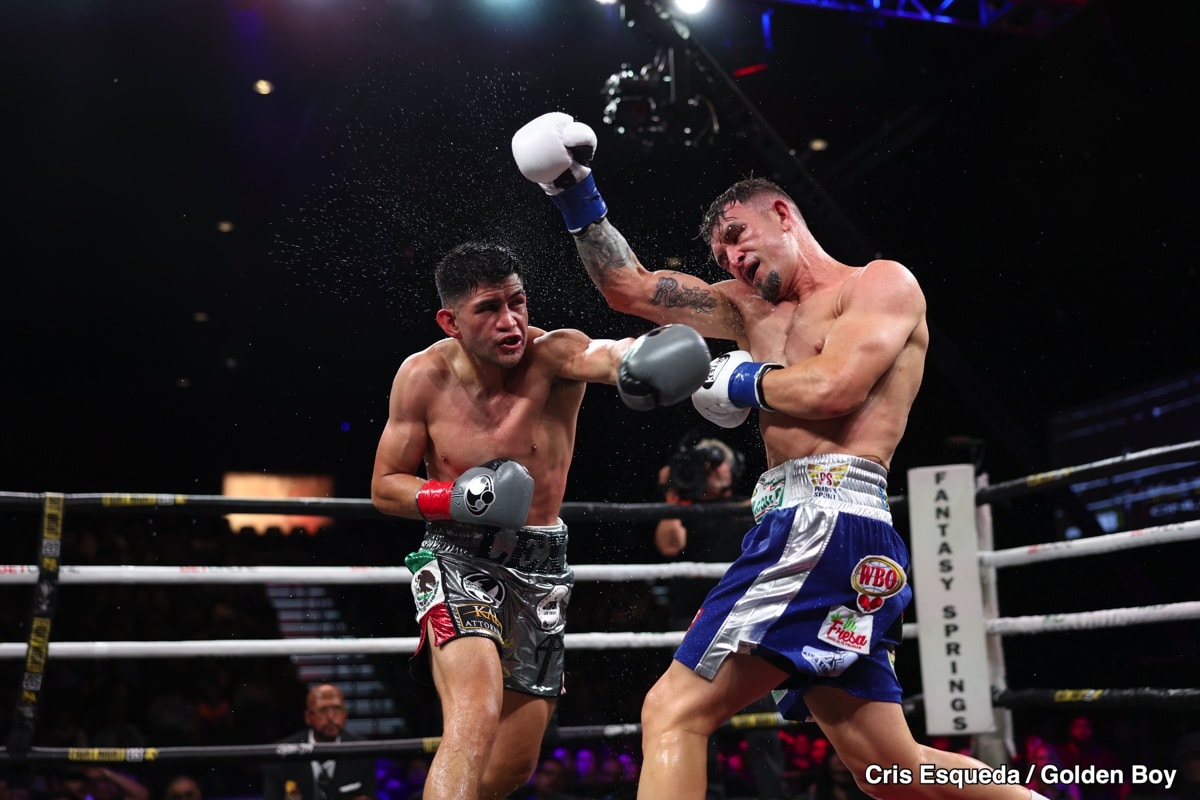
According to Dan Rafael, the IBF has given both sides 30 days to negotiate a deal. If no agreement is reached, a purse bid will follow. That directive comes only days after Hitchins withdrew from his planned defense against Duarte hours before the bout, reportedly after vomiting several times following breakfast on the morning of the fight.
The immediate casualty is Duarte. He trained for the opportunity, made weight, and lost the fight on the day of the event. Now he is not next in line. Even if Hitchins defeats Delgado, there is no guarantee Duarte will get a chance to fight him. At best, he waits. At worst, he starts over.
For Hitchins, the order sharpens an uncomfortable pattern. He has had trouble making 140 before. Ahead of his 2024 bout with Gustavo Lemos, he struggled on the scales and looked drawn out. Questions about how long he can remain at junior welterweight have followed him since. The illness last Saturday will only amplify those doubts, regardless of whether it was food-related, dehydration, or simple bad luck.
He has resisted moving up to 147, and the reason is obvious. At 140, Hitchins enjoys a physical edge. He is long for the division, strong in the clinch, and hard to outmaneuver over twelve rounds. His style benefits from being the bigger man who can control distance and pace. At welterweight, he would be meeting opponents closer to his own dimensions. The small advantages he relies on would narrow.
That calculation has made the weight cut worth the risk. Until it isn’t.
The IBF’s decision now removes the option of easing back in against Duarte on a new date. Delgado is not a soft touch. He is a steady, disciplined fighter who has waited his turn. A mandatory defense demands full preparation and a clean weight cut. There is no room for half-measures, especially after what happened last weekend.
This also changes how Hitchins is viewed. Pulling out on fight day damages trust with fans and promoters, even when illness is genuine. Boxing runs on reliability. Fighters who repeatedly flirt with the edge of a division invite scrutiny. Each difficult cut becomes part of the story, not a footnote.
Hitchins has the talent to stay champion. He boxes with control and rarely gives rounds away cheaply. Yet talent does not solve a shrinking window on the scale. If the cut is becoming a recurring gamble, then every defense at 140 carries risks before the opening bell even sounds.
Delgado now stands as the test that will answer two questions at once. Can Hitchins handle a disciplined mandatory, and can he make the weight cleanly without drama? If he looks strong and composed, the conversation quiets. If he struggles again, the call to move to 147 will grow louder.
Duarte, meanwhile, is left in limbo. His situation underscores how quickly opportunity can disappear when sanctioning bodies step in. One week, he was fighting for a title. The next, he is watching negotiations unfold from the outside.
The IBF did what sanctioning bodies are built to do: enforce order in the rankings. The effect, though, is to push Hitchins into a corner he has been trying to avoid.
At some point, a fighter has to decide whether the advantage of being the bigger man is worth the cost of getting there. This mandatory may force that decision sooner than he planned, and I’m not convinced 140 is going to cooperate much longer.