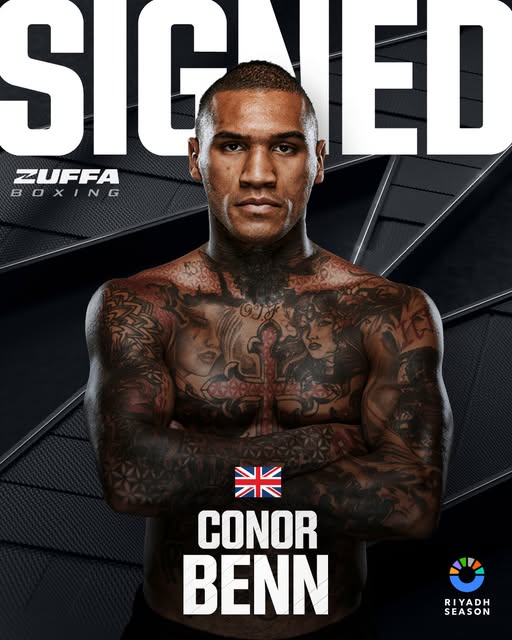
Conor Benn’s move to Zuffa Boxing comes with a reported $15 million purse attached to a single fight — a structure that leaves little margin for error in his first appearance under the new banner.
The agreement is straightforward: one fight, one purse, no long-term security.
That design offers freedom, but it also concentrates considerable risk.
The Structure Behind the Money
Eight-figure purses in boxing are usually tied to multi-fight agreements that provide promoters with options and long-term positioning. Extensions and renewal clauses typically protect the investment.
This arrangement appears different.
If Conor Benn delivers a convincing win in his debut for Zuffa Boxing, his market position strengthens immediately. He becomes a viable centerpiece for Zuffa’s boxing expansion and a bridge between the U.K. and U.S. markets.
If he loses, there is no built-in obligation to rebuild him or extend the partnership.
The outcome of one night will heavily influence how both sides proceed.
Early Signals From Zuffa
Zuffa has already demonstrated visible backing.
Benn’s signing was promoted on WWE Monday Night Raw, a platform with a broad U.S. audience unlikely to be deeply familiar with the British welterweight scene.
That exposure signals intent. It suggests that the parent company, TKO Group Holdings, sees Benn as part of a broader strategy rather than a short-term addition.
With that visibility comes expectation. High-profile placement increases scrutiny as much as it increases opportunity.
A win validates the move and keeps negotiating power aligned with the fighter.
Any follow-up agreement would likely be structured from strength, with Benn retaining influence over direction, opponents, and terms.
In that scenario, the one-fight model functions as a launchpad rather than a gamble.
Defeat Changes the Equation
A loss would not derail Benn’s career. It would, however, alter perception and reduce flexibility.
With no long-term agreement in place, Zuffa would control the next step. Benn would need to reassess his options without the momentum of a successful debut.
In boxing, perception shapes value. A setback in a high-visibility first outing affects both commercial standing and negotiating strength.
Limited Immediate Alternatives
If Benn were to lose, a return to Matchroom would appear unlikely given the public nature of the split.
Eddie Hearn acknowledged that he learned of Benn’s departure through legal channels rather than through direct discussion. His father, Barry Hearn, later described Benn as “classless” during a talkSPORT appearance and questioned whether Matchroom should have backed him as strongly as it did following two failed drug tests.
Boxing has seen relationships repaired before, but those remarks suggested a significant divide.
If the Zuffa venture did not extend beyond one fight, realistic alternatives would likely narrow to major operators in the United States, such as Golden Boy Promotions or Premier Boxing Champions.
In the U.K., BOXXER could represent an option. Whether Frank Warren would pursue such a move is less clear, given his history of distancing his stable from prolonged controversy.
The opportunities would remain, but the control would shift.
The Margin Is Thin
Benn rebuilt commercial momentum through high-profile events against Chris Eubank Jr., restoring his standing and earning power.
This Zuffa debut serves a different purpose. It is about establishing a position inside a new promotional structure.
The one-fight agreement creates urgency without a safety net. For Zuffa, it is a calculated investment in performance and a test of whether Benn’s value travels.
With no guaranteed second chapter written into the contract, the result of one night will shape what comes next.
About the Author
Phil Jay is the Editor-in-Chief of World Boxing News (WBN) and a veteran boxing reporter with 15+ years of experience. He has interviewed world champions, broken international exclusives, and reported ringside since 2010. Read full bio.