Adam Rosales tells us about his first trip to the Chinese Grand Prix in Shanghai, an affordable race that offers excellent spectator views.
Photos kindly supplied by Adam. Additional photos supplied by GPDestinations.
This post contains affiliate links. We may receive a commission if you make a purchase after clicking on one of these links
Attending the Chinese Grand Prix was not really on my radar until I found a solid loyalty points deal for flights that lined up with race weekend. It can be hard to source tickets for this race (especially as a foreigner), but I also knew that GPDestinations still had some available. I also found a great deal for a Hilton hotel in Shanghai for four nights, two of which I was able to cover with loyalty points.
After getting my partner’s approval, I went ahead and booked the trip! I reached out to a friend living in Hong Kong and let him know my plans. He was eager to join me for race weekend. With a cheap flight, hotel and race ticket all confirmed, I was ready to travel to what was both a new country and a new race weekend for me, as well as hang out with an old friend.
Grandstand B
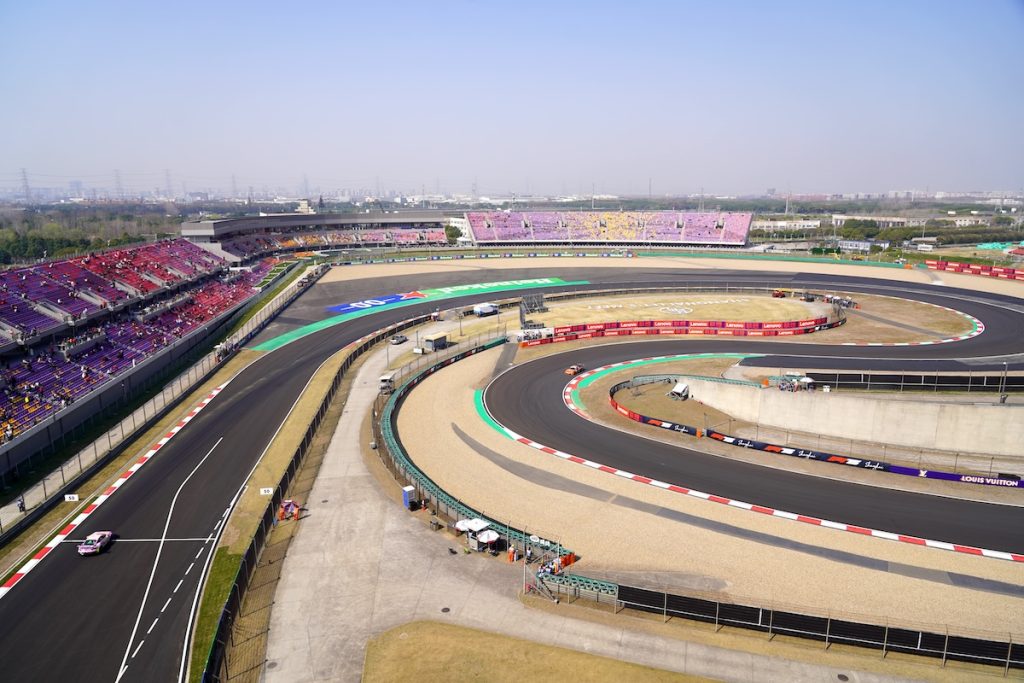
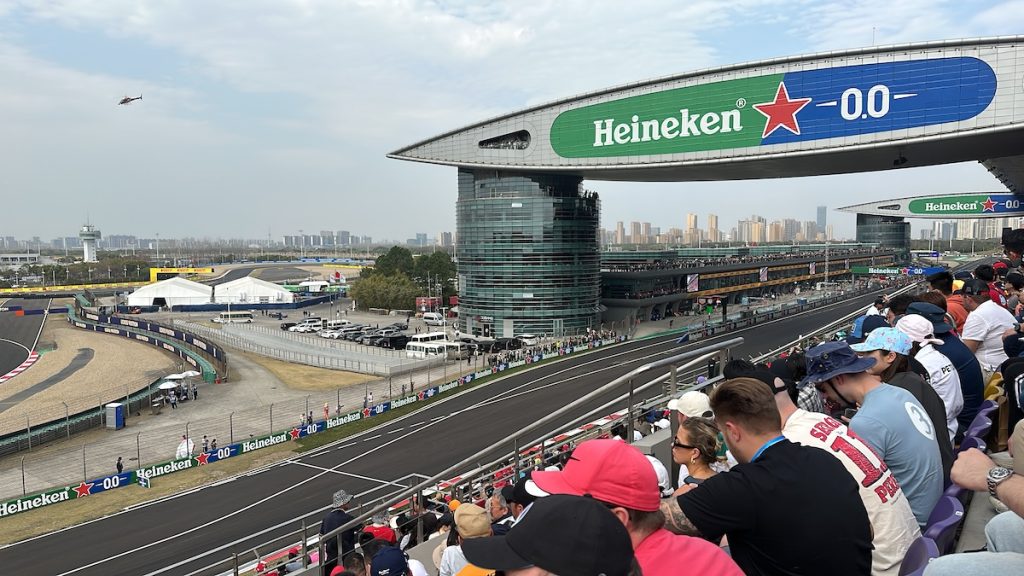
I purchased a ticket for Grandstand B, which is located on the outside of Turn 1 at Shanghai International Circuit. GPDestination’s ticket supplier, GPT-Worldwide, allocated us some great seats in the upper B1.2B section of the grandstand. We were close to the Main Grandstand A and had a view of almost all of Sector 1! There was a small blind spot after Turn 4, but you could see the hairpin of Turn 6 and the cars didn’t disappear fully until they swept into Turn 7.
This was definitely one of the best views from a Turn 1 grandstand that I’ve ever experienced! Being able to watch the cars launch into Turn 1 at the race start and battle through various racing lines in both the sprint race and grand prix was a fantastic experience.
The grandstand follows the curve of the circuit and encircles the Turn 1 section like an arena. It used to be GA but was expanded into a grandstand before the race returned after the pandemic in 2024. It’s a big grandstand, and worth noting that the views from other sections will be very different to what I experienced. For example, you may be able to see more of Turns 5-7 but the view of Turn 3 would probably be blocked by the walls, as the circuit dips downhill between Turns 2-3.
Ticket Registration & Circuit Entry
The organization at Shanghai International Circuit is pretty unique. China is well known for its advanced use of facial recognition technology, and this extends to the ticketing and entrance process at the circuit in Shanghai. It’s the only circuit on the current calendar not to use traditional printed tickets, QR codes or e-ticket PDFs.
About six weeks before race weekend, GPT-Worldwide contacted me to register our tickets with our passport. Once we registered, I was sent a link to upload a scan of our passports as well as a photo to be used at the entry gates.
The website was a bit picky about the photos and scans used. But thanks to some comments on the r/grandprixtravel subreddit (of which I’m the founder and moderator) and the ‘Going to the Chinese Grand Prix’ Facebook group, I uploaded my picture using a real scanner rather than my phone. This did the trick and once I was registered, my tickets were available in my account on the Chinese ticketing portal, and I could see the exact seat that I’d been allocated in Grandstand B.
Upon arrival at the circuit, I went through the normal event security and then the turnstile for tickets scanned my face. The display showed the photo I uploaded and the ticket seat information and I was allowed to proceed. Once inside the circuit, there are secondary facial scans to enter each grandstand.
It might sound complicated, but once the online registration was completed, everything was super easy. It was nice not having to worry about carrying tickets or showing tickets on my phone, especially when entering the grandstand with several drinks in my hand!
Trackside Organization, Circuit Facilities, Food & Drink
It’s worth noting that there were no food or drink vendors inside my grandstand. The food and drink vendors for Grandstand B were all outside the gates, behind or under the grandstand. (I’m told that there are food and drink vendors inside the main grandstand, however.)
There was plenty to choose from in terms of food and drink, and vendors were located all around the fan areas and close to the grandstands. Lines were lengthy at times but quite well organized and streamlined, given that China uses digital (mainly smartphone) payments for everything. Vendors mostly understood English and it wasn’t difficult to buy anything with hand gestures like pointing at what you wanted to buy.
Food options catered to both local and international fans, including burgers, hot dogs, noodles and rice bowls with various proteins. There were also plenty of snacks available, such as fries/chips, chicken nuggets, popcorn and lobster crisps. The average meal cost around 80 RMB ($12 USD) and a Heineken 500ml was 40 RMB($6 USD).
There were lots of sponsor activations both inside the circuit and outside the metro station, as well as display cars, merchandise stalls, and food/drink concessions. Bathrooms were indoor and cleaned constantly underneath both grandstands A and B. There were also some temporary indoor bathrooms at the fan zone next to the metro, not all of which had western-style toilets. The first cubicle I opened there was a “hole in the ground” squat type, but I just went to the next one over and found a western-style toilet (and a urinal).
Overall, Shanghai International Circuit is a fantastic facility. Even though it’s more than twenty years old, it still feels very modern when compared to some other current F1 circuits. The security (and soldier!) presence was high, making it feel very safe at all times. As an English speaker, I was able to get by just fine. My friend speaks Mandarin, which made things easier for us, but it was not necessary at the circuit as much as downtown.
Trackside Meetup
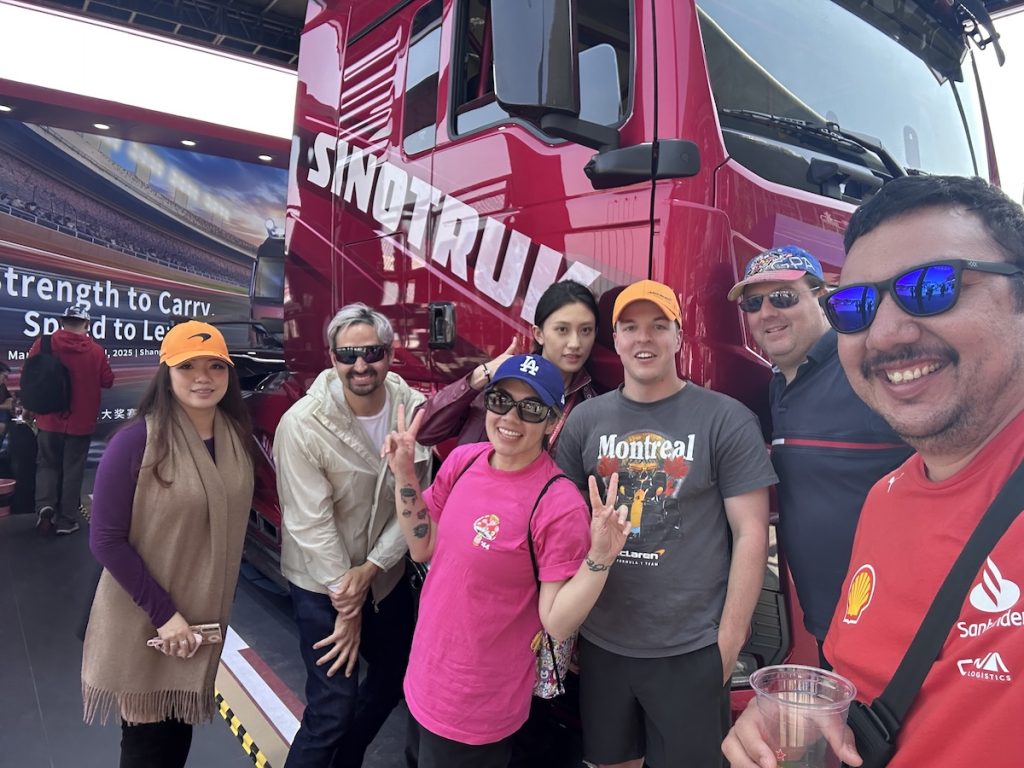
I organized a small meetup at the track for the subreddit I moderate called r/grandprixtravel and had about 8-10 different people show up. It was great to meet others and not that difficult to arrange. It’s a good option if you are open to meeting other fans from a like-minded community like my subreddit or the ‘Going to the Chinese Grand Prix’ Facebook group. The Chinese Grand Prix is overwhelmingly attended by local fans, so it was also nice to bring some of the quite small contingent of international fans together at this race.
Getting to Shanghai International Circuit
Like many purpose-built circuits on the current F1 calendar, Shanghai International Circuit is built on the outskirts of the city. The circuit is easily accessed by Shanghai Metro Line 11 and there’s a station next to the circuit. My friend and I used a mix of taxi and metro to get to and from the circuit across race weekend. Taxis (DiDi) are actually fairly cheap to get around the city. You can order them from the DiDi app within Alipay.
On Friday, we took a DiDi Luxe from my hotel to the circuit for 133 RMB ($19 USD). The ride took about one hour and there was some traffic, but not huge delays. We took the metro home that day. It’s easy to use the metro system with the Alipay app; you can generate a QR code to use at the turnstiles, which in turn charges your account.
On Saturday, traffic was much heavier and I realized halfway through the trip that our DiDi driver did not take the toll road. The police also closed many roads around the circuit. Our driver wasn’t sure where to go and we got stuck in traffic close to the circuit – along with many other vehicles. After about 90 minutes, we decided to get out of the car at one of the roads leading to the circuit and walk (jog!) the rest of the way. It was a little over a mile, and it looked like we would not make it in time for the start of the sprint. Luckily, I was able to flag down a hospitality shuttle and convince the driver to take us closer to the gate. I sent him a small tip via Alipay to thank him. We arrived at our seats as the formation lap started for the sprint, and decided we would not take any more taxis! After qualifying, we returned to the city via metro.
On Sunday, we took the metro both to and from the circuit, experiencing an interesting form of crowd control after the race that I hadn’t seen used before. At the gates to the metro, the police held the crowd for a few minutes at a time. We were herded into a separate gated area, where we waited until it was full and were then allowed to board the next train. It felt like we were a herd of cattle, but it actually worked really well. The amount of fans in the holding was enough to fill the train without it feeling overcrowded or uncomfortable.
The closest station to my hotel was about a 25 minute walk away, so we decided to take a DiDi to and from the metro stop. Using DiDi to get to and from the airport was also easy. Normally, I paid a bit more for the premium version (DiDi Luxe), which was a van with comfortable recliner chairs and also offered free snacks and a choice of still and sparkling water!
Getting a China Visa
Having to obtain a tourist visa to visit a country was a new experience for me. I’ve visited other races where you need to obtain a ‘visa on arrival,’ such as Bahrain. As a US citizen, the process was a little bit more difficult for China. The fact that my closest Chinese Embassy (in Houston, Texas) had recently closed made it even more difficult. I didn’t really have the time (and didn’t want to spend money on flights and hotels) to make an in-person application at the next closest Chinese Embassy in Washington, DC.
In the end, I simplified the whole process by using a visa agent, Austin Passport Express. They helped me fill out the visa application form on the official Chinese website and made sure my photo met the guidelines. I dropped off my passport with the agency, submitted the application, and paid their fee ($399 USD) and the visa fee ($140 USD). The visa agent used a courier service with overnight shipping to get my passport to the embassy in Washington DC. I received my passport back via courier about one week later. Getting the visa ended up being my biggest expense of the whole trip but it is valid for ten years.
Internet Restrictions & Essential Apps
In many ways, China is different to the other countries that Formula currently visits. For example, Google doesn’t really work. I did some research before the trip on GPDestinations, Reddit and various travel blogs. This helped me to download the right apps ahead of time and be ready for when I arrived in Shanghai. I also downloaded a VPN but ended up not needing to use it, because my phone was on roaming and technically still using my American cell phone network.
I was able to access all my social media and didn’t encounter the typical web restrictions that impact most tourists to China. My friend who joined me for the weekend had also lived in Shanghai (albeit ten years ago) and was able to help me set up the two most important apps, Alipay and WeChat, ahead of time.
Alipay is the most common way to pay for anything and also has built-in apps such as AMaps (similar to Google Maps) and DiDi (similar to Uber). The app also had metro and bus schedules, plus loads of other useful information. WeChat is like the Chinese version of WhatsApp, and is essential for communicating with other people in China.
Downtown Shanghai
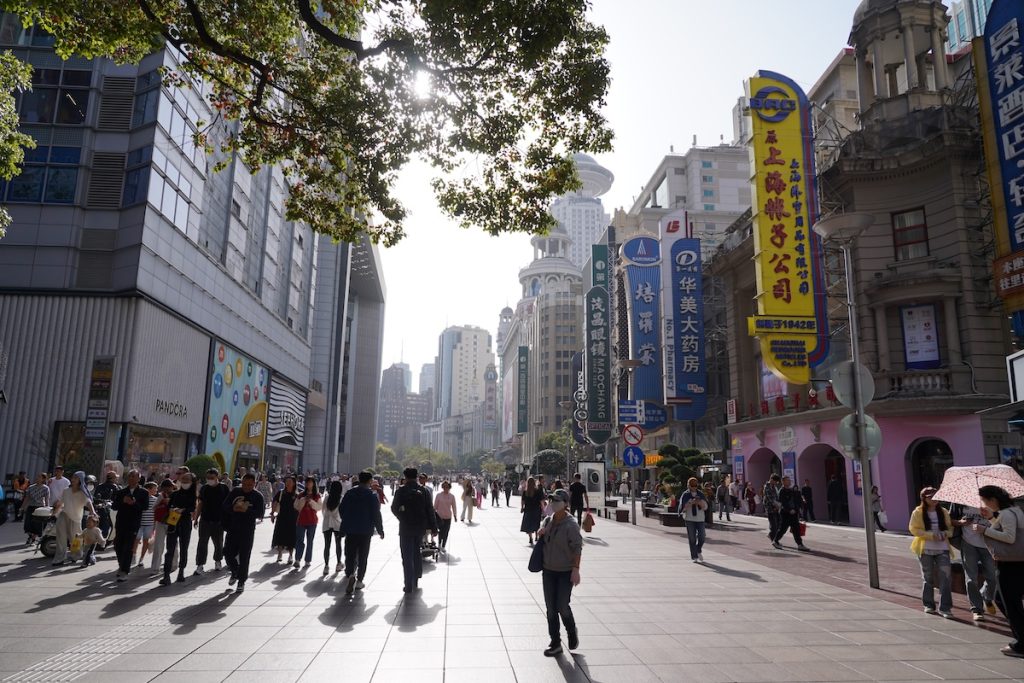
Shanghai is well connected and easy to navigate, though there are some language barriers. If you’re patient and willing to embrace new adventures, you’ll have a great time. English isn’t spoken very much in day to day interactions, like in restaurants or at markets. But the staff at my hotel did speak English.
I used my Hilton Diamond status with a mix of points and money to pay for my hotel, Hilton Shanghai City Center. It was a good option for race weekend, offering five-star amenities and a fantastic buffet breakfast at a very affordable price.
The area around my hotel, and basically everywhere I walked in the city, felt very safe. I had no issues walking around either by myself or with friends, even late at night. The only note of caution would be to be on the lookout for electric mopeds riding on the sidewalks. The riders often turn off their lights at night to save their battery, and since they are electric, they can easily sneak up on you and fly past almost silently.
We ate at some tasty and fun restaurants, like Haidilao (hotpot) and Japanese BBQ (grill on the table). The staff were friendly and the prices for both food and drinks were very reasonable by global standards. The ordering process can be a bit daunting for non-Chinese speakers, but translation apps and hand gestures (pointing at the menu) are helpful! All the local people I interacted with over the weekend were welcoming, friendly and helpful, even if there was sometimes a language barrier. Having a friend who spoke Mandarin was helpful, but not always – some locals spoke a different dialect that he didn’t understand!
Closing Thoughts
I absolutely loved visiting Shanghai, and I can’t wait to go back. I’d love to visit the race again or see more of China. The food was tasty, prices were reasonable and the whole city felt very futuristic and tech-forward. As a race weekend, it’s one of the cheapest on the calendar. The circuit is very well connected via the metro and the trackside views are great. I’m glad the race finally returned after the pandemic. The local fanbase for Formula 1 in China is huge, and this country deserves to have a race.
Cost Summary
Return Flight: Austin-Shanghai (PVG) with Delta Air Lines = 76,400 Miles + $41.51 USD
3-Day Race Ticket: Grandstand B = €407 EUR ($484 USD)
4-Night Hotel Stay: Hilton Shanghai City Center = 100k Hilton points (two nights) + $292 USD (two nights)