THE DIFFERENCE BETWEEN the Toronto Blue Jays winning and losing the 2025 World Series was roughly the length of a hyphen. In the ninth inning of Game 7, the dash to the plate by Toronto’s Isiah Kiner-Falefa — one of the game’s most famous hyphenated players! — resulted in a 4-2 putout. Kiner-Falefa was out at the plate by the smallest of margins, and now, more than five months later, we are still talking about it.
To be clear: None of this is to blame Isiah Kiner-Falefa for the Game 7 loss. That epic game contained so many moving parts, so many other chances for the Blue Jays and Los Angeles Dodgers to win or lose. Kiner-Falefa’s lead off third base that night was just one of many elements that will be dissected for the next 50 years.
That play, however, inspired another examination of baserunning in the major leagues, which is spectacularly awful given the remarkable talent in the game today. The players are bigger, faster, stronger and better than ever, yet, paradoxically, they run the bases more improperly than at any time in perhaps the past half-century.
Editor’s Picks
2 Related
It is not the fault of the players; it is more the fault of the industry. Kiner-Falefa entered Game 7 in the ninth inning as a pinch runner for Bo Bichette. When Kiner-Falefa reached third base, the bases were loaded with one out, Daulton Varsho was at the plate and the score was tied at 4. The discussion among the Toronto coaches and players had occurred long before this moment. Two things cannot happen to the man on third: He cannot get doubled off on a line drive and he cannot get picked off on a throw from the catcher (known as a back pick). Given those warnings, Kiner-Falefa took a short lead off third. He also did not get a good secondary lead, which is defined as the lead the runner takes after (or right before) the pitcher goes into his motion. Varsho hit a hard one-hop grounder to Dodgers second baseman Miguel Rojas, who slipped slightly while catching the ball but still had time to force out Kiner-Falefa by an inch at the plate.
“The coaches wanted a shorter lead and a smaller secondary lead,” Kiner-Falefa said. “It’s organizational policy. I did what I was told. It was not the sole reason that we lost the game. It was a great learning experience. If I could do it over again, I’d have gotten a couple of steps out. I do what the organization wants.”
And for many years, organizations have spent next to no time on baserunning.
“Baserunning is not taught at the level it had been — it has become more in vogue lately because of the new rules [bigger bases, the three-engagement rule],” former major league manager Joe Maddon said. “I know baserunning wasn’t even taught in many minor league organizations because, analytically, they did not want you running. They don’t want you to get picked off. So, the information given to these players over the last decade may be minimal based on the analytics. Because if you get picked off or make an out on the bases, that might be the mortal sin. I cannot even classify it as a venal sin, that might need to be mortal in the analytic journals.”
After the drama of Toronto’s Game 7, though, players and front office executives alike are learning just how high the stakes can be.
“Baserunning was the most fun part of the game for me,” said Paul Molitor, a Hall of Fame infielder and one of the best baserunners ever. “It was all about, ‘Where can I find 6 inches?’ If you can find that 6 inches or a foot, it might cost you a World Series ring if you don’t.”
MIKE ROBERTS IS 76 years old. He is demonstrating the proper way to take a lead, a secondary lead and how to run the bases. And he is barefoot.
Roberts played professionally, he coached at the University of North Carolina for 20 years, and he is the father of former Baltimore Orioles second baseman Brian Roberts, a brilliant baserunner. Over the past 13 years, he has served as a special baserunning instructor for the Chicago Cubs, Orioles and Pittsburgh Pirates. This spring, he was hired by the Blue Jays because, among other reasons, they were tied for last in the major leagues with the New York Yankees and St. Louis Cardinals in an advanced metric known as “holds,” which charts extra bases taken once a ball is put in play.
And when he showed up to coach, he showed up barefoot.
“I don’t know anyone else that teaches that way, the equipment man has to throw my socks away at the end of spring training,” Mike Roberts said. “It’s like taking yoga on the beach. It’s like Rocky sprinting on the beach. It gives you a better feel of the ground. …
“I want them to feel the ground, to come out of the ground like a catcher coming off his knees to throw. I started this back years ago with [former major leaguers] Walt [Weiss] and B.J. [Surhoff] at Carolina in the early ’80s. I was taught this by [former Florida Southern coach] Hal Smeltzly. He was a phenomenal infield instructor. We would take infield with no gloves and no shoes on. You get in a flow, kind of like yoga.”
Hall of Famer Johnny Bench, arguably the best defensive catcher ever, also said players today should rely more on their guts.
“It is an instinctive thing. You don’t need anyone to tell you [what to do on the bases],” he said. “I see players doing these things today, and say, ‘What are they thinking?’ They don’t even think. They don’t know baserunning. They don’t know anything. These guys today are so good. They are phenomenal. But for them not to be able to read a ball … “
Though Kiner-Falefa said he was reacting to the Blue Jays’ directives in Game 7, Molitor also said he would have read the situation differently.
“Especially with a left-handed hitter at the plate, and the proximity of the third baseman, they were more concerned about a back pick or a line-drive double play,” he said. “But if I’m on third base with a chance to win the World Series, I’m going to opt on the side of being aggressive as opposed to the unlikely potential of two negative things happening.”
Inside the rise of the home run robbery
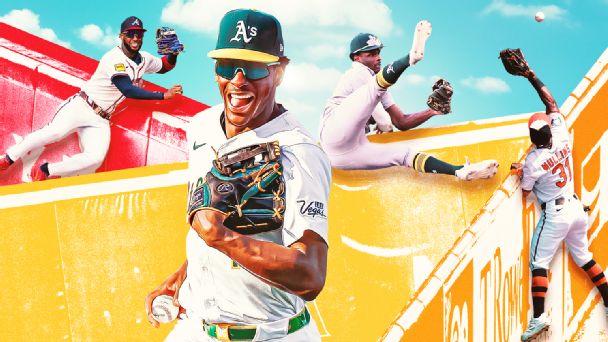
Nothing brings a crowd to its feet like a homer being taken away. Here’s what’s powering the rise in outfielder thievery. Jeff Passan »
Kiner-Falefa’s out wasn’t the only baserunning blunder by the Blue Jays in the Fall Classic. Toronto lost Game 6 in part because Addison Barger, who was the potential tying run, was doubled off second base on a line drive to Dodgers left fielder Enrique Hernandez, a stunning end to any game. It was the first game in the history of the postseason that ended on a 7-4 putout.
“Baserunning should be very high up [on a team’s list of priorities]. The goal should be to get a runner to third base with less than two outs, and to second with two outs,” Roberts said. “Where we struggle today with baserunning is it’s considered taxing on the body. In pro sports today, there is a concern about making the athletes do too much. But what you can do can be done in a 12-foot area. You don’t even need to sprint to improve your baserunning. And every player can be an above-average baserunner.”
It all starts with the lead.
Roberts defines a secondary lead as “the movement by the runner once he knows the pitcher is going to the plate. Where we’re trying to improve is this: The momentum should start once the pitcher is in his stretch, no matter where the pitcher’s head is — this is critical — whether it’s at the plate, right- or left-handed hitter at the plate. Our momentum should start prior to the pitcher’s front leg coming up. If they’re in their windup with the bases loaded, which still happens on occasion these days, you still start your walk prior to the pitcher’s movement. That’s not being done across the game by many people, having movement early. It’s like a linebacker that starts 2 yards deeper than they usually do it, and they’re two steps into it before the snap. The old-fashioned way of baserunning is waiting for the pitcher to make any movement. In the history of the game, the pitchers have controlled the baserunners. I believe runners control the pitchers. In that mode, we eliminate waiting for the pitcher to start everything.”
Brian Roberts, Mike’s son, stole 285 bases in his 13-year big league career, at an 80% success rate. Mike says Brian “is the most instinctive baserunner I’ve ever seen.” Mike believes Brian is the first player in the modern era to leave his feet — literally hop — while taking a lead with the ball still in the pitcher’s hand.
Brian Roberts said he started doing the jump lead in college, but he used it only at first base. When he got to pro ball with the Orioles, a coach, Joe Tanner, helped him perfect it.
“I just kind of carried it over to my professional career,” Roberts said. “People thought I was crazy. Lee Mazzilli was the first manager [with the Orioles] I had in pro ball that said, ‘Just go, be you.’ And that’s when I started doing it all the time. You get a 10-, 12-foot lead, and I’m at a 6-foot lead, and they have to go from a standstill, and I have momentum, I’m going to beat them. There were some guys that saw me do it, and they started doing it. [Former Texas Rangers/Detroit Tigers second baseman] Ian Kinsler basically told me, ‘I learned to steal third by watching you play against us.’ And he became really, really good at it. You see the best base stealers out there, and they all get momentum. They find a way to get their body in motion before the pitcher really goes to the plate.”
Roberts stole third base 83 times in 93 attempts, an 89.2% success rate. Last season, Pittsburgh’s Double-A team, Altoona, that Roberts instructed, went 19-for-19 in steals of third base.
“Others can disagree, but there is a way that you can be safe 100% of the time stealing third base,” Mike Roberts said. “Brian understood how to be safe at third because you do not run if you’re not sure you will be safe. I’ve been teaching in pro ball, and the biggest struggle is getting the players to buy into this concept.”
WHEN MIKE ROBERTS WORKS with a team like the Blue Jays, he focuses on many things, but key among them, he said, are “momentum, timing and using baseball IQ and the knowing positioning of the defense.”
“Great baserunners have great feet and a little daredevil in them,” he said. “I’d like to see baseball do more momentum leads where you really work on timing. A great example is a defensive back who is trying to block a field goal. They start 10, 15 feet away from the line of scrimmage, they run horizontally to gain momentum, and when the ball is snapped, they are flying.
“I’d love to see baseball go more momentum leads versus just shuffle your feet horizontally, then run. Momentum leads can lead to much better baserunning and base stealing. And still everyone will be OK, not get picked off. When you don’t have a bat in your hand or a glove on your hand, every player is a sprinter. We need more of a sprinter’s mentality. We are coming out of the blocks. And we are cheating a little just by coming out of the blocks.”
The momentum lead has been extended into what Yankees manager Aaron Boone calls a “vault lead,” which is done extensively by Yankees shortstop Anthony Volpe, who starts his move to second base on stolen base attempts by leaving the ground with both feet. (“Brian’s feet never left the ground like that,” Mike Roberts said.)
Behind the scenes at Driveline

How the lab that famously gave pitchers an edge is helping hitters, too. Alden Gonzalez »
Mike Roberts uses what he calls “the double clap drill” in instructing baserunners. It is a rhythmic clap, one after the other. On the first clap, the new-school runner goes. On the second clap, the old-school guy goes.
“When I was an old-fashioned baseball player playing pro ball in the ’70s, I’d take my 11-, 12-, 13-foot maximum lead at first,” Roberts said. “When Brian came along in 2003, he takes a 6-foot lead, he’s going to be half the distance I am, but he’s going to shuffle lead, time the pitcher. In the double clap drill, on the first clap, the momentum runner starts. On the second clap, the old-fashioned runner, Mike Roberts, starts to run. Brian is going to fly by me because he’s got momentum. …
“I teach ice hockey feet. The best feet I’ve ever seen were youngsters who grew up playing ice hockey, or street hockey like Surhoff in Rye, New York. When you’re on roller blades or skates, you have two dominant feet — 999 out of 1,000 minor league players have one dominant foot and one nondominant foot. That’s the problem in baseball, not having the footwork that you need to be quick off the mark, to do what Brian could do, what Volpe can do. I try to teach drills from one dominant foot to equalize those feet to have that quick shuffle. When you activate your shuffle lead, it’s better, it’s more explosive, you become a better baserunner. We need to develop more hockey feet in baseball. I am the only dude on the planet Earth that uses that term: I want hockey feet, go barefoot, momentum leads.”
“My dad is loco,” Brian Roberts said with a deeply respectful laugh. “I don’t even understand where that man comes from except I knew his dad, so I do know exactly where he comes from, [Grandpa] wasn’t a baseball guy, but he was just as wild. I laugh and I joke, but I think, ‘Man, what a great way to live when you can do that at 76 years old. Most 76-year-olds can barely get out of the house.’ I hope I have some sort of ability to do something like that. But yeah, it’s crazy. He brings energy that most 25-year-olds can’t bring.”
IN HIS 13 years of teaching in pro ball, Mike Roberts said the best baserunners he has seen are Javy Baez and Mookie Betts. Betts essentially won the 2020 World Series for the Dodgers with his elite baserunning, including scoring from third base with the eventual winning run on a contact play in the sixth inning of Game 6, all created by his lead and secondary lead.
“Mookie and Javy have great anticipation,” Roberts said. “You don’t get antsy when you anticipate. That leads to activation. That leads to acceleration. The three A’s of baserunning.”
But in earlier eras of the game, Betts and Baez wouldn’t have been alone.
Molitor was so good at taking a lead, he sometimes would get so far off first base that he could peek in to see the catcher’s signs (back in the day when catchers actually put down signs). Molitor said he learned the skill by playing the baserunning game “hot box” (in which fielders chase down runners caught between bases) for hours a day as a kid. He said he had no single baserunning mentor professionally or in college. He didn’t use a vault lead; he was never in midair while the pitcher was holding the ball in the stretch.
“Experience was my best teacher,” he said. “It’s critical because the whole idea of 90 feet doesn’t always translate to a run, but it translates to a better chance of scoring a run. You always try to cut down the distance to the next base. I see a lot of people get pretty lazy with the concept of how they go about that. They assume when they become a baserunner that it’s no longer their responsibility if they score, it’s the responsibility of the people that follow them in the lineup. The art of scoring runs has been diminished over time. There is an art to it. When [Minnesota Twins center fielder] Byron Buxton was in the minor leagues, he’d get on base, and when he got back to the bench, I’d go through each segment of his jaunt around the bases. Stolen base, ball in the dirt, first to third, to make sure he knew where those opportunities were taken advantage of or missed. Even if you’re not in a base-stealing situation, there is still an art to timing that great secondary lead.”
It is an art perfected by the greatest baserunners, including Jackie Robinson, Lou Brock and Rickey Henderson — the greatest base stealer of all time.
“Rickey didn’t get a huge lead,” former major league manager Buck Showalter said. “When I saw a guy get way, way off the base, I don’t worry about him too much. They put so much fear in their lead, they were afraid they were going to get picked off, they don’t get any momentum to the next bag.”
Bench said the best baserunner he ever saw was ex-Dodger Davey Lopes, who was adept at getting a good lead and reading the pitcher. Bench also played every day with Joe Morgan, who, in his back-to-back MVP seasons in 1975 and 1976, stole 127 bases and was caught only 19 times. No one took a bigger lead than Morgan. In the old days of AstroTurf fields with the sliding cutouts around the bases, Morgan would often get both his feet on the second-base side of the cutout, a lead of roughly 15 feet.
“Joe knew exactly the lead,” Bench said. “He kept a diary. He knew the pitchers, what move they had. The timing. He knew all of that. He wrote it in his book every night. When you say he got a huge lead, he had already measured that lead. He knew before the game. That is the preparation that most guys don’t have.”
“Tony Gwynn was great, too,” Maddon said. “He would get a good lead at second base, and the pitcher would look back at the runner. The moment the pitcher looked back at the plate, Tony would take a hop toward third base to disguise the extra lead he was getting. That kind of thing was very popular back then.”
WHEN ROBINSON, BROCK, Lopes, Henderson, Gwynn, Molitor and Morgan played, great baserunning was essential to scoring runs, not like it is today.
But slowly, the art of taking a lead and running the bases properly is coming back. Granted, the new rules have added to the increased interest, but teams are starting to emphasize baserunning more. And the players are benefiting. In 2025, New York Mets outfielder Juan Soto led the National League with 38 steals in 42 attempts, having previously never stolen more than 12 bases in any season. Seattle Mariners first baseman Josh Naylor, whose speed is graded at well below average, stole 30 bases in 32 attempts. In 2024, he had only six steals.
“I didn’t change anything last year, I didn’t change the way I took a lead, I just took a chance, that’s all,” Naylor said. “What’s the expression? You don’t make 100% of the shots that you don’t take. That’s it.”
Several teams this spring, not just the Blue Jays, emphasized baserunning and getting a good lead.
“Ask our GM [Nick Kroll], we talk about baserunning every day, every day because the industry has allowed it to fall so far,” Cincinnati Reds manager Tito Francona said. “It’s more important now than ever.”
So, there is hope. The game is full of great baserunning instructors, including Tigers third base coach Joey Cora, age 60, who played 11 years in the big leagues. But the best might be the Arizona Diamondbacks’ Dave McKay, who played eight years in the major leagues, is in his 41st year as a major league coach and, like Mike Roberts, is 76 years old. Every day, McKay posts a baserunning report card for all the players, which includes roughly 25 different facets of running the bases, including the secondary lead.
“Dave is the best,” said former major league manager Tony La Russa. “He has been doing this since the mid-’80s. After every game, he watches tape on every movement that every player takes on the bases. It’s amazing.”
McKay posts his daily baserunning chart for every player in the privacy of the clubhouse, away from the media.
“It’s a positive thing, not a negative thing. They take pride in the chart, and it works,” McKay said. “The first thing guys can do when they get to the park is look at the chart. That way, you can teach baserunning without saying a word. I have aerial shots from every ballpark in the big leagues. If a player disagrees [with a grade], I can show them the tape. I see them peeking at the chart when they’re eating lunch. Sometimes, someone will say, ‘Oh s—, he got me for that.’ We use a number and a letter system. One letter is for heads-up baserunning. Another letter is for head-up-the-ass baserunning. They’ll see something like that happen in a game, and say, ‘Oh no, that’s a J!'”
McKay agreed that baserunning, including the art of taking a lead, was stressed more this spring. He said Milwaukee Brewers manager Pat Murphy is among others who are starting to follow the Diamondbacks’ model.
“We are looking for anything that will give you an edge,” McKay said. “Every inch counts.”
“That way, this [new teaching, new emphasis] will catch on with the front office people who take the examples of Soto and Naylor, and the instincts of Mookie Betts and Javy Baez on the bases,” Mike Roberts said. “Everyone can be a better baserunner. Everyone in the major leagues can be an above-average baserunner.”
Clearly, the increased emphasis on baserunning is coming from what happened to the Blue Jays in Game 6, but even more in Game 7 when the Blue Jays, in part, lost in the World Series by roughly the size of a hyphen.
“We saw last year that a split second and slight hesitation can cost a team a game,” former major league catcher John Baker said. “It’s a great example that you can be just safe or just out. A secondary lead is not fun, it is not sexy and it’s not the most exciting part of practice. … But it is critical. And it really matters in the postseason. Maybe a secondary lead is not important on the fifth day of April, but when it comes to winning a championship, everything is important. There are no such thing as little things; they’re winning things.”