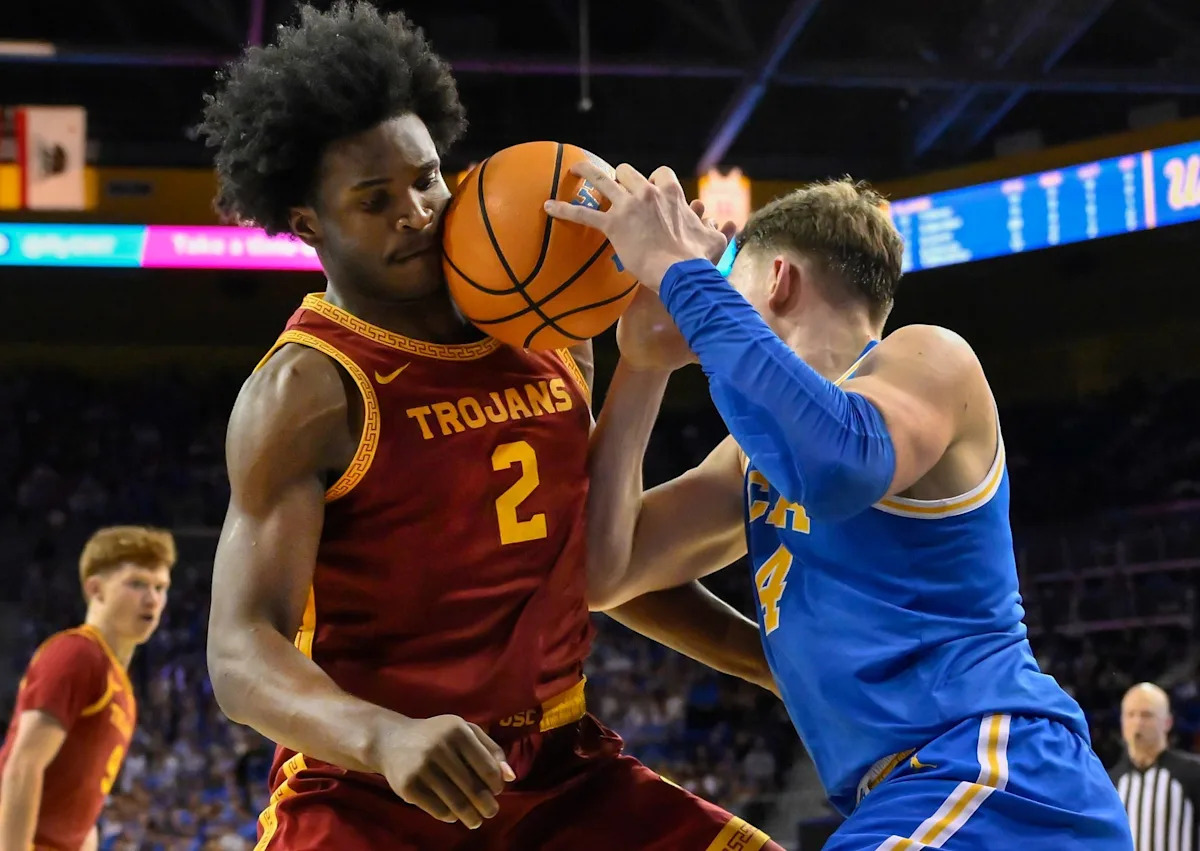
The Utah Jazz. The Indiana Pacers. The Washington Wizards. The Sacramento Kings. The Brooklyn Nets.
If you are an NBA team facing any one of those five teams, you should win that game. They don’t have much of an interest in winning. On the contrary, their interest is in June’s NBA Draft.
Welcome to the NBA’s tank race of 2026. Four of those teams are in smaller markets or, at least in Washington’s case, operate as such. One of the teams lost a megastar to a torn Achilles in Game 7 of the NBA Finals. Three of those teams have to lose as much as they possibly can, because they have a first-round pick owed to another team that they need to protect.
All five of those teams are in search of a franchise-level talent to add to their current core. And this the draft has multiple franchise talents.
The NBA, if you have been reading, came down hard on Utah and Indiana. The recent $500,000 fine of the Jazz and $100,000 fine of the Pacers will attest to that. Phoenix Suns owner Matt Ishbia, emerging from his Ivory Tower to publicly blast the practice on social media, will attest to that. And that was humorous, because the Suns have no first-round picks to tank for. The comments of NBA commissioner Adam Silver, whom I think has generally done a good job of managing the league, on All-Star Weekend, will attest to that.
But the Jazz, according to multiple league sources, weren’t happy about the fine. In fact, they were livid. The Pacers clearly weren’t happy either, with coach Rick Carlisle on Tuesday calling it “ridiculous.”
The Jazz think the league singled them out, and they are correct. They think the public criticism and shouts about the integrity of the game were people aiming for low-hanging fruit. The Jazz are correct on that as well. They paid the fine and are going to do what they need for the remainder of the season to keep their top-eight protected first-round pick. A fine isn’t going to knock them off stride. But the Jazz feel like the league moved the goalposts on them, and they might not be alone.
Utah was fined for sitting Lauri Markkanen and Jaren Jackson Jr. in the fourth quarter of a game against the Miami Heat. Ironically, the Jazz actually won that game. Last year, they were fined $100,000 for keeping Walker Kessler out of a game against the Washington Wizards in March. The Jazz contend that the league communicated after the 2025 fine that it was OK to play key guys limited minutes. So, the 2026 fine for playing guys limited minutes and labeling the strategy “conduct detrimental to the league” infuriated Utah.
People have had a lot to say about the Jazz tanking for multiple seasons. Why didn’t they try to be competitive? What if I told you they had a trade lined up three years ago for a significant win-now piece? Because they did. And what if I told you the agents told the Jazz that the player preferred to be elsewhere? Because that happened. In the end, that player was traded elsewhere. And that’s the conundrum that small-market teams like Utah face. The Jazz eventually realized the only thing they could completely control was their draft picks. They acted accordingly.
The Jazz don’t contest that they are tanking and have tanked in recent years. But they are not the first team to tank in multiple seasons. They are not the first team to pull players in the fourth quarter of a game in order to try to lose that game. They are not the first team to stuff an injury report with, let’s say, dubious injuries.
The league is reportedly working on measures to combat tanking that could be enacted as early as next season, including eliminating pick protections, freezing lottery odds at the trade deadline and restricting teams from picking in the top four of a draft in consecutive seasons.
It’s one of the biggest topics in the league now, but the practice has gone on for decades. You can view the practice however you’d like. But if you look at a small-market team, almost any small-market team that achieved the ultimate success of an NBA title, chances are there was some tanking behind it.
The Oklahoma City Thunder tanked to get Chet Holmgren.
The Cleveland Cavaliers tanked to get LeBron James.
The San Antonio Spurs set up an entire dynasty by tanking to get Tim Duncan.
If I were the owner of an NBA team, particularly a small-market NBA team, and my general manager told me we need to tank to try to get a franchise player, I would willingly give the go-ahead. I would tell them to do it with gusto. I would attend games while G League players tried to lose games for my team. I would celebrate injury reports that read “injury management.” I would support sitting key players in fourth quarters. I would pay the fines. And I would tell my GM to keep tanking.
But tanking is just a part of the equation and doesn’t guarantee success. If you are the Spurs, and you tanked to get Wembanyama, then the next steps become a whole lot easier.
You have to make smart moves around the tanking. You have to employ a coherent front office, and you have to set your roster up around the margins to make the tanking translate to success over the long term. There are a lot of small-market teams that haven’t gotten that part right. But, there are a lot of bigger market teams — the Los Angeles Lakers are the poster child for this — that don’t have a great front office but win an NBA championship because of one star wanting to play in that market and that one star attracting a significant co-star.
The NBA’s heart is largely in the right place. The league is correct in wanting teams to play competitive basketball. But the league has historically had a competitive balance issue. Since 1980, 46 years ago, roughly nine NBA champions have come from what we’d call small-market teams. Three of those have come in the last five years. Four have come in the last 10 years. One franchise, the Spurs, accounts for five of those titles.
The league flattened the lottery odds in 2019 to reduce the chances of landing the top pick to 14 percent for the teams with the three worst records. And while that generally was a good move, it also gave way to even more tanking. The Jazz and Wizards each fell four spots in the lottery last year in the race for Cooper Flagg. The Spurs and Dallas Mavericks each moved up. And now, the Jazz and Wizards are each in the tanking race for one of Darryn Peterson, AJ Dybantsa or Cameron Boozer.
The fact that the 2026 class is quite possibly the most talented since 2003 is another reason why teams are tanking this year. The 2023 draft had Wemby. In 2025, there was Flagg. In 2026, three prospects are essentially No. 1 picks in almost any other year, and there is plenty of quality depth behind those three. It’s that good of a draft. Teams that have protected picks are going to move mountains to protect those picks.
It’s part of the game. And it’s something the league shouldn’t overreact to. Yet, it is.
The very competitive balance that Silver is rightfully searching for is the reason that the league just needs to recognize that there will be a certain amount of tanking yearly.
Small-market franchises generally have little other recourse. The megastar who gets traded isn’t asking to be traded to a small-market team. The cream of the crop in free agency isn’t generally going to the small-market team. The small-market team has to consistently deal with the pressure of bigger market teams trying to poach their stars.
Think about it: How many stories and reports of when the Jazz might trade Lauri Markkanen have you read over the past three years? Or reports of the Golden State Warriors offering Jonathan Kuminga and three first-round picks for Markkanen? Or, how many shows have you seen where analysts claim the Jazz need to trade Markkanen because they are wasting his prime? All of this despite the Jazz over that same course having very little inclination to trade him for anything short of a Godfather package.
On aggregate, bigger-market teams don’t have to deal with that nonsense. It’s roughly the same thing the Milwaukee Bucks are currently going through with Giannis Antetokounmpo. Small market teams, despite Silver’s best efforts, are generally treated like the farm system for bigger market teams. Silver doesn’t want it to be that way, but it has been historically, and it is now.
For those small markets, the large rule of thumb is that talent comes through tanking. That’s just the way it is. If the league implements rules against tanking, there will still be tanking around those rules. And there should be. Teams want to win championships. Championships are won with premier players. And premier players are at the top of drafts.
Omar from “The Wire” said it best. It’s all in the game, yo.
Indeed. It’s all in the game.