The CEO of the College Sports Commission, the new body charged with approving athletes’ outside name, image and likeness (NIL) deals, said Tuesday that the organization is encountering unexpected challenges due to a surge of school-affiliated deals it believes do not comply with the rules the schools themselves established.
Bryan Seeley, a former Major League Baseball executive hired to oversee compliance with last year’s House settlement, said the system was not designed to handle so many deals in the recent football portal window that were made by “associated entities” such as schools’ NIL collectives, multimedia partners and apparel providers.
Some of those deals guaranteed players millions of dollars without having yet received approval through NIL Go, the clearinghouse used by the CSC.
“The massive increase in associated deal volume of this kind of manufactured NIL is leading to some increased review times in NIL Go,” Seeley said during a call with reporters on Tuesday. “I don’t think the system was designed with this amount of associated deals in mind.”
The CSC was established to enforce the new college sports revenue-sharing model under the House settlement. Under the terms of the settlement, college athletes are required to submit any NIL deals from third-party entities — those outside of a school’s direct revenue-sharing cap — that are over $600 through the NIL Go platform for review. Those deals do not count toward a school’s annual revenue sharing cap, which is roughly $20.5 million for the 2025-26 academic season.
CSC’s latest data, published Tuesday and including deals submitted in January and February, showed an increase in the number of deals submitted, which Seeley said coincides with the college football transfer portal window. Seeley added that it’s an encouraging sign because it suggests athletes are reporting deals and utilizing the system as intended.
However, he also noted an increase in third-party deals from associated entities, which the CSC considers “subject to increased scrutiny” for approval. That increase has led to longer reviews for many of those deals and has made CSC guidelines more difficult to enforce.
A person working in the NIL space told The Athletic that those deals take at least several weeks to process and, even then, are often returned for more information.
CSC reported that, through the end of February, NIL Go has cleared more than 21,000 deals worth a combined $166.5 million but has not cleared 711 deals worth a combined $29.3 million. Through January and February 2026, more than 3,700 deals worth a combined $39.3 million were cleared, while 187 deals worth a combined $14.4 million were not cleared.
Since the NIL Go platform launched last June, 50 percent of submitted deals have been resolved (either cleared or not cleared) within 24 hours, and 70 percent have been resolved within a week of all required information being submitted, according to the report.
However, the report also stated that the number of third-party deals, specifically those from associated entities, submitted by power-conference athletes over the past two months has increased by 65 percent.
According to Seeley, the CSC defines an associated entity as, essentially, “an entity that’s either controlled by a donor or is working on behalf of the school to help retain and recruit student athletes.”
Ole Miss quarterback Trinidad Chambliss’ national AT&T commercial or Arch Manning’s Warby Parker ad don’t involve associated entities, but a deal from a booster-led NIL collective does. Many third-party NIL deals also originate from multimedia rights (MMR) partners such as Learfield or Playfly that manage a school’s sponsorships, or apparel partners (such as Nike or Adidas), and the CSC treats those as associated entities. Hence, there is an increase in review times and accompanying challenges.
“What I’ve been told is that there was a belief among many that perhaps up to 90 percent of deals flowing through the system would do so automatically, that would not need any kind of human review,” Seeley said. “So the bottom line is, there are changes we need to make in the system that we are working on making that I think will improve things.”
Third-party NIL deals, which provide over-the-cap dollars, have become crucial to the ongoing financial arms race in college sports, particularly football and basketball, with top programs exerting to spend above their revenue-sharing allotment.
There are those in the industry claiming that some football programs will spend north of $40 million on their rosters for the 2026 season, which is more than double the full revenue share pool for every sport in the entire athletic department, meaning a lot of that money — a majority, for some schools — would be earmarked from third-party, over-the-cap deals.
If a star quarterback or top player is reportedly earning $4 million this season, there’s a high likelihood that some or most of it is budgeted outside of revenue sharing. And a lot of it is reportedly coming in the form of front-end guarantees through MMR and apparel agreements, big-money deals that Seeley says run counter to House settlement rules.
“There’s no question that during the portal, agents were demanding guaranteed NIL for student athletes and schools felt pressure to guarantee those things, even though such guarantees are not within the rules,” Seeley said. “I think any athletic director would tell you that.”
Challenges with NIL Go and third-party deals are just two of the persistent obstacles the CSC has faced since the settlement took effect last summer. Another is the participant agreement, which would require participating schools to cooperate with investigations and enforcement decisions made by the CSC and prevent them from filing lawsuits that challenge those rules, but has not yet been signed.
The CSC’s enforcement arm has quietly conducted investigations into various programs, but there have been no known violations or penalties handed down, sparking some criticism within the industry.
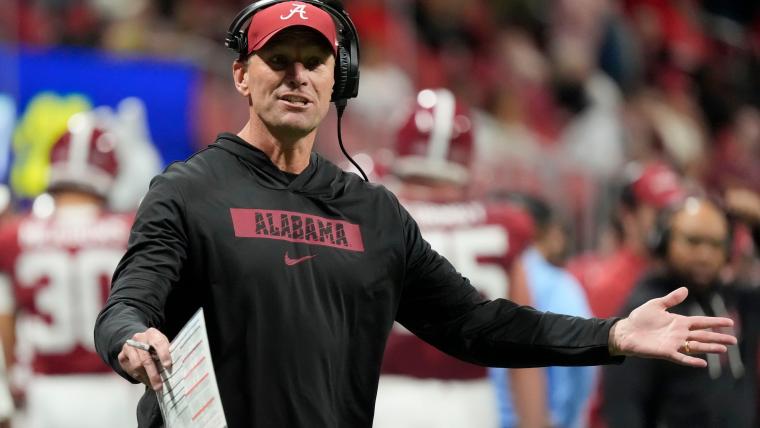
“Until we build a structure to enforce the rules that are in place, we are constantly just putting bandages over issues,” Ohio State football coach Ryan Day said Tuesday. “My concern, more than anything, is that we are raising a young group of college coaches that see it that way, it’s becoming their normal. … Once we get that addressed, we can deal with everything else, but until then we are going to have a situation where people will try to get around the rules.”
Seeley acknowledged Tuesday that the pushback from certain factions against signing the participant agreement has contributed to the lack of enforcement.
“The participant (agreement) is a key tool to giving the CSC the enforcement powers and needs,” Seeley said. “That doesn’t mean without the participant agreement, it’s impossible, but I don’t think you’re going to see enforcement at the speed with which the schools want it.”
He added that there are currently 15 people on staff with the CSC, but that a lack of staff is “not a large contributing factor” to the enforcement challenges.
“I would say a lot of this is problems with the system just not being designed to handle this,” Seeley said.
As the CSC aims to adapt and improve its operations, the tests will continue. Both the men’s and women’s college basketball portal windows open in early April, less than a month away.
— Cameron Teague Robinson contributed to this report.