Zuffa Boxing 02 delivered decisive results, but Oleksandr Gvozdyk’s knockout loss offered a clearer insight into the project’s early direction than any scorecard.
The former world champion was stopped in seven rounds by Radivoje Kalajdzic in Las Vegas, a result that stood out less for the upset than for what it revealed about how Zuffa Boxing is currently being built.
Gvozdyk was competitive early and even scored knockdowns, yet the ending underlined a familiar reality: drafting experienced free agents at the back end of their careers carries immediate risk and limited long-term reward.
Gvozdyk and the limits of short-term name value
Gvozdyk’s résumé and past championship status gave Zuffa Boxing instant credibility on paper. In practice, the bout exposed the fine margins involved in relying on fighters whose peak years are behind them. While the Ukrainian remains skilled and durable, the physical decline that comes with age and inactivity is difficult to mask once pressure is applied.
This is not a criticism of Gvozdyk himself. It is a roster-building question. Using established names can help early events gain attention, but the model becomes fragile when those names are no longer positioned to progress within a broader competitive structure.
Zuffa Boxing 02 clearly illustrated the tension. The event delivered competitive action and decisive finishes, yet the most discussed moment highlighted the downside of leaning too heavily on legacy rather than trajectory.
Zuffa Boxing 02 as a stress test
Beyond the Gvozdyk result, the card offered a useful snapshot of where the promotion stands. Jose Valenzuela’s wide unanimous decision win over Diego Torres showed that Zuffa can stage controlled, professional boxing, while Serhii Bohachuk’s split decision over Radzhab Butaev reinforced the unpredictability that comes with competitive matchmaking.
However, none of the results materially reshaped a division or created obvious forward momentum. That matters when assessing whether Zuffa Boxing is currently building toward something sustainable or simply maintaining visibility while larger structural questions remain unresolved.
Z03 and Z04 underline the same pattern
The confirmation of Zuffa Boxing 03 and 04 continues that theme. Z03 will be headlined by heavyweight contenders Efe Ajagba and Charles Martin, a pairing that offers familiarity and physicality but little in the way of long-term divisional consequence. It is serviceable matchmaking, not headline-delivering.
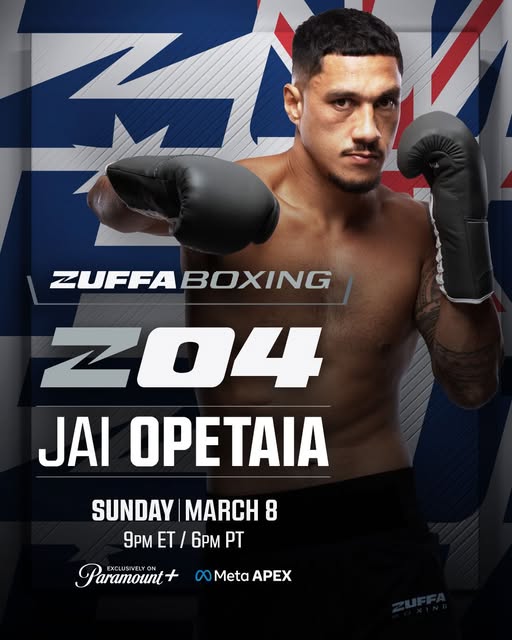
Z04, scheduled for March, keeps the calendar moving but does not yet clarify the promotion’s competitive endgame. Together, the upcoming events reinforce the sense that Zuffa Boxing is operating in a holding pattern rather than executing a fully formed league strategy.
Why Jai Opetaia matters disproportionately
Within that context, the presence of IBF cruiserweight champion Jai Opetaia takes on outsized importance. Unlike many of the free agents currently populating cards, Opetaia is in his prime, holds an active world title, and carries genuine divisional relevance.
If Zuffa Boxing is to transition from staging events to building a coherent competitive ecosystem, fighters like Opetaia represent the clearest bridge between credibility and continuity. His involvement offers something closer to a foundation than a placeholder.
That imbalance is telling. When one fighter carries disproportionate strategic weight, it highlights how much of the roster remains transitional rather than central to a long-term vision.
When Opetaia’s opponent is confirmed, it will offer more insight into where any of the four major sanctioning bodies’ world champions stand on the UFC pyramid.
The Ali Act question still hangs over the project
All of this unfolds against the unresolved status of the Ali Act as it applies to Zuffa Boxing’s intended league model. Until regulatory clarity is achieved, flexibility remains limited.
Events can be staged, but the architecture needed to support a true league structure remains on hold.
Viewed through that lens, Zuffa Boxing 02 looked less like a step forward and more like a checkpoint. The promotion is active, visible, and learning, but not yet in a position to fully deploy what it ultimately wants to build.
Gvozdyk’s knockout did not define the night. It clarified it. And until Zuffa Boxing moves beyond reliance on aging free agents toward fighters who can carry momentum forward, future cards may continue to reveal the same growing pains.
About the Author
Phil Jay is the Editor-in-Chief of World Boxing News (WBN), a veteran boxing reporter with over 15 years of experience. He has interviewed world champions, broken international exclusives, and reported ringside since 2010. Read full bio.