The video assistant referee causes controversy every week in the Premier League, but how are decisions made and are they correct?
This season, we take a look at the major incidents to examine and explain the process both in terms of the VAR protocol and the laws of the game.
All screenshots photo credit: NBC
Andy Davies (@andydaviesref) is a former Select Group referee, with over 12 seasons on the elite list, working across the Premier League and Championship. With extensive experience at the elite level, he has operated within the VAR space in the Premier League and offers a unique insight into the processes, rationale and protocols that are delivered on a Premier League matchday.
Referee: Michael SalisburyVAR: Nick HoptonIncident 1: Possible handball offence by Wolves defender Emmanuel Agbadou in the penalty area.Time: 38 minutes
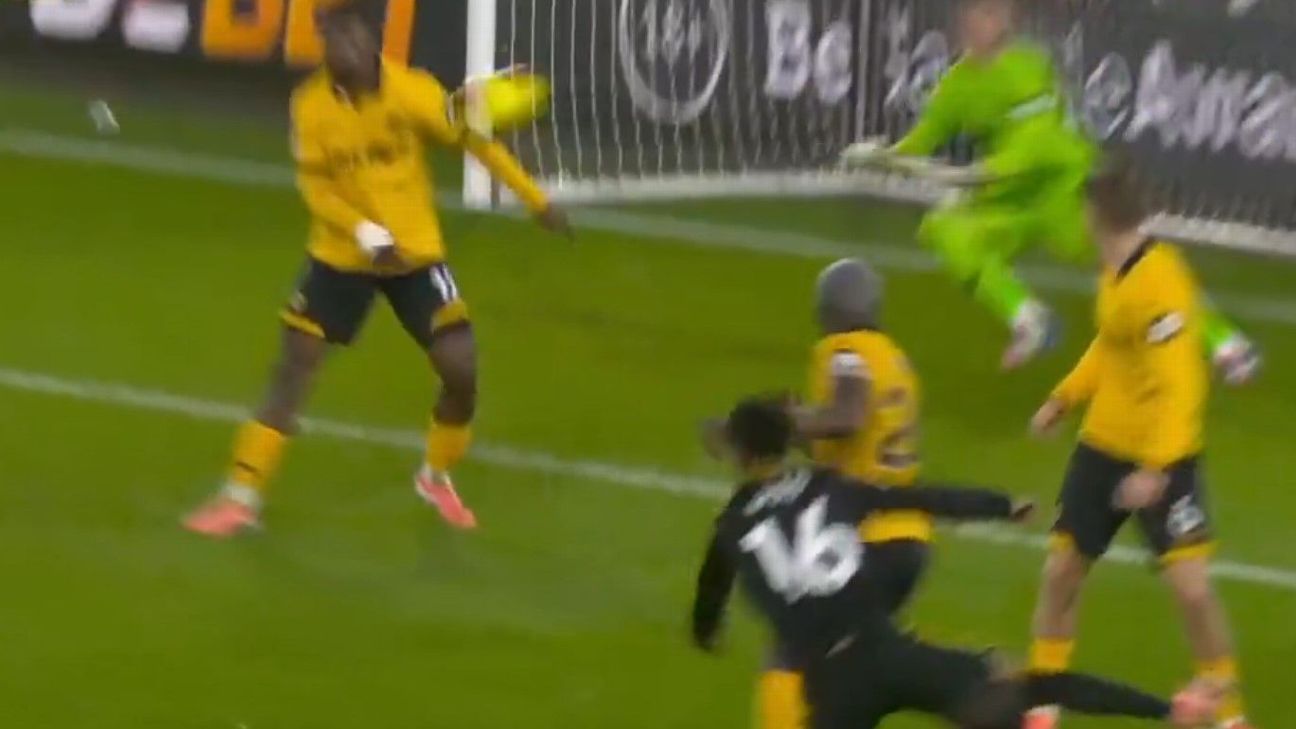
What happened: The shot of Manchester United winger Amad Diallo struck Agbadou’s arm, but referee Salisbury did not feel it was a handball offence and allowed play to continue.
VAR decision: The referee’s call of no penalty was checked and confirmed by the VAR, with the incident deemed not to be a handball offence.
VAR review: The review process for the VAR requires them to apply specific handball criteria against the available footage to judge if an offence had been committed:
– Did the player deliberately touch the ball with their hand/arm by moving the hand/arm towards the ball.- Did the player touch the ball with their hand/arm when it has made their body unnaturally bigger.
A player is considered to have made their body unnaturally bigger when the position of their hand/arm is not a consequence of, or justifiable by, the player’s body movement for that specific situation.
The ball struck the left arm of Agbadou at speed and it was the wrong side for the referee to have a clear view, so his on-field communication would have reflected such. Having considered all the evidence, the VAR felt that the area of the arm where the ball struck and the action/level of movement negated this being an offence.
Verdict: This looked and felt like a handball in real time. And, having watched the replays, I believe this to be a missed intervention by VAR.
The ball struck the bottom of Agbadou’s short sleeve on his arm, and this area meets the criteria for a handball offence. Equally, there is a deliberate movement by the Wolves defender’s arm towards the ball — it was away from his body and therefore made his body unjustifiably bigger. An on-field review (OFR) should have been the outcome.
Incident 2: Possible handball offence by Wolves defender Yerson Mosquera in the penalty area.Time: 80 minutes
What happened: This time, Amad’s shot struck the arm of Mosquera. The Wolves defender leaned into it, with the ball deflecting off his upper arm, but the referee, who had a very good view, did not feel that it was a handball and allowed play to continue.
VAR decision: This time, the VAR felt the action by the defender met the criteria for a handball offence and recommended an OFR.
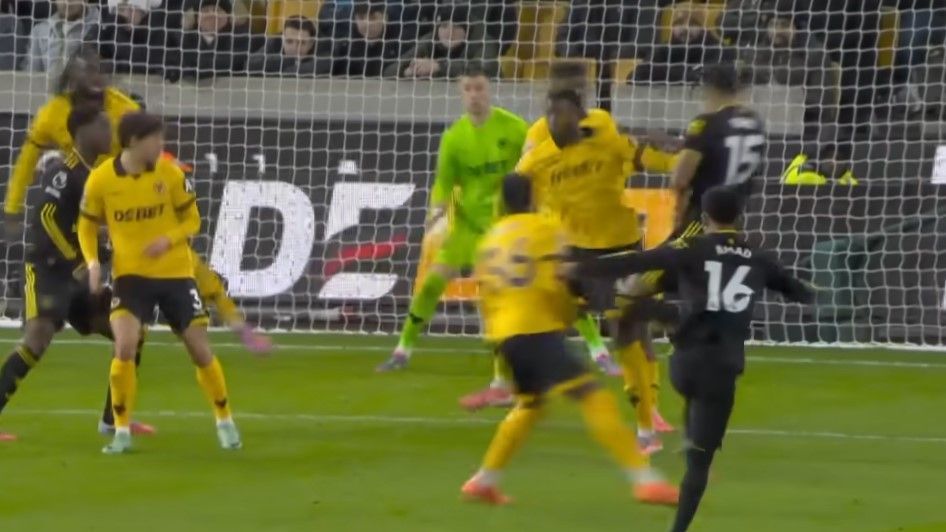
VAR review: Unlike the first incident in this match, referee Salisbury had a clear view of this one and his live communication would have described Mosquera’s actions as a non-deliberate. The VAR disagreed and identified that Mosquera not only leaned into the shot, but that there was a deliberate secondary movement of the arm towards the ball. Once Salisbury reviewed the footage via the OFR, he awarded United a penalty and sanctioned Mosquera with a yellow card.
Verdict: This was, in my view, a correct intervention. Comparisons will, understandably, be drawn between two similar incidents in this match, but handball is a challenging law to apply consistently given the subjective considerations involved. That said, these two incidents will be viewed as relatively straightforward decisions from a VAR perspective and both should have resulted in an intervention.
Referee: Simon HooperVAR: Tony HarringtonIncident: Possible handball as the ball struck the arm of Brighton’s Georginio Rutter three seconds prior to him scoring the equalizing goal.Time: 90+1 minutes
What happened: In the final minutes of this match, Rutter scored an equalizer for Brighton with the ball seemingly striking his arm in the buildup. Brighton’s Charalampos Kostoulas had challenged for a high ball with an overhead kick, and it ended up with teammate Rutter. He controlled it initially with his right thigh, but then it deflected onto his right arm and onto his boot, allowing him to make his first attempt on goal, which was saved by West Ham goalkeeper Alphonse Areola. Brighton defender Jan Paul van Hecke then played the ball back to Rutter, who scored at the second attempt. (Watch in U.S.)
VAR decision: The referee’s call of goal was checked and confirmed by VAR — it was deemed that Rutter’s arm was in a natural position and that he did not deliberately handle the ball, while the contact with his arm was not immediately prior to him scoring.
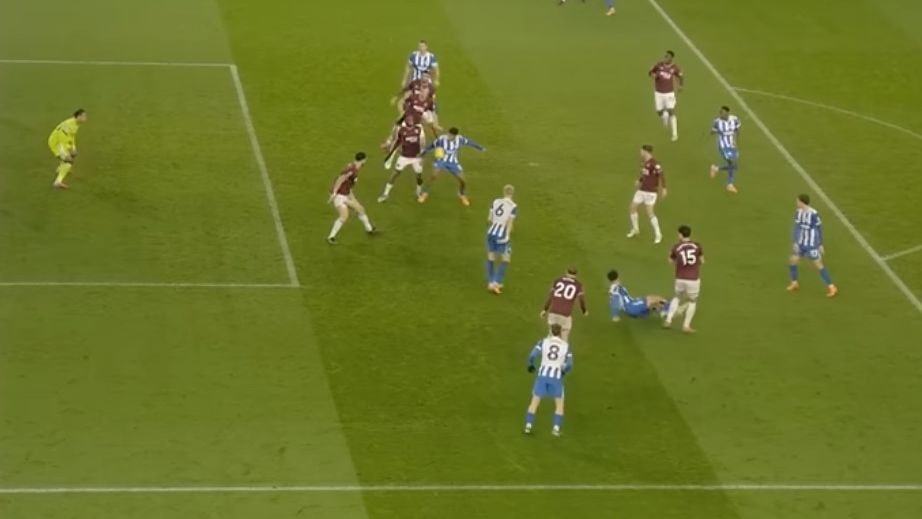
VAR review: The review process for the VAR centered around the ball striking Rutter’s arm in the buildup to him scoring. The VAR would need to determine if the action by Rutter was deliberate … as an accidental striking of the arm could not be deemed an offence. The VAR deemed Rutter’s arm to be in natural and justifiable position for his action at that moment.
Verdict: This is a situation that will cause some debate, given the outcome resulted in a goal. And it was a decision that West Ham manager Nuno Espirito Santo said afterwards was an incorrect interpretation of the law by both the referee and VAR.
While I understand there is some subjectivity in the decision process around the nature of the movement being deliberate, it did feel like the outcome was a correct one given the goal wasn’t scored until the next phase of play.
Interestingly, according to the law, if Rutter had scored from his initial shot then the goal would have been disallowed, regardless of whether the ball striking his arm was deliberate or otherwise. However, the fact that Areola saved the original effort reset the attacking phase and negated any offence being committed.