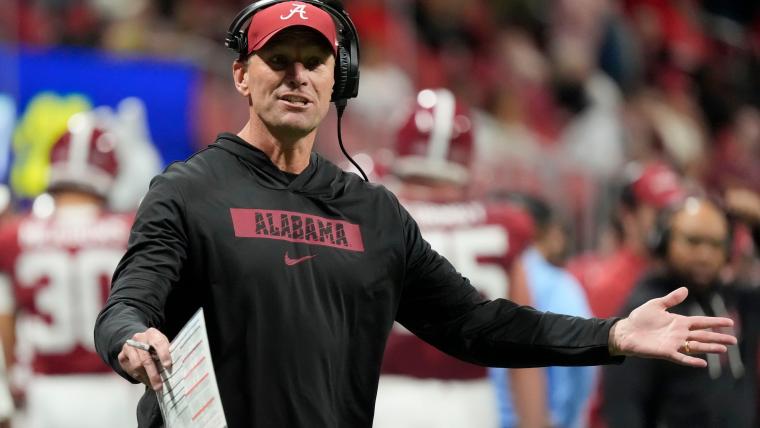
Ole Miss head football coach Pete Golding spoke publicly for the first time about tampering allegations involving transfer linebacker Luke Ferrelli.
In his Tuesday news conference, Golding chose not to let the situation devolve into a back-and-forth. Instead, he opened with a quote that reframed it as a matter of perspective: “I think there are two sides to every story. I’m not going to use a podium for grandstanding.”
Ferrelli transferred to Clemson after the 2025 season but flipped to Ole Miss on Jan. 22, 2026. Roster timing complicated Ole Miss’ pursuit of the former Cal linebacker. At the time, LB TJ Dottery still held the green-dot communications role on defense, limiting Ole Miss’ ability to offer Ferrelli.
“Bottom line with Luke is he came on a visit before the Fiesta Bowl,” Golding said, “and we wanted him for the green dot, and we didn’t have that available.” Dottery later transferred to LSU, opening a spot at linebacker.
That opening led Ferrelli to Ole Miss, and Clemson head coach Dabo Swinney went public, saying, “If you tamper with my players, I’m going to turn you in. It’s just that simple.”
What could Pete Golding face if violations are proven?
Swinney alleges that Golding contacted Ferrelli while he was in class at Clemson and that Golding sent photos of a $1 million contract. Clemson sent the evidence to the NCAA, but it is unclear what penalties are on the table.
The NCAA is expected to vote in April on newly proposed penalties related to tampering. If approved, Golding and Ole Miss could face a six-week suspension from coaching and recruiting duties, a fine of 20% of its football budget and a reduction of five roster spots for the following season.
Tampering concerns reflect college football’s evolving reality.
In the NIL era, where third-party involvement and informal communication channels are common, proving direct tampering has become increasingly rare.
Programs like Ole Miss are operating in a system where opportunities shift quickly and enforcement struggles to keep pace. Ole Miss will almost certainly submit evidence that its roster has been tampered with, and the entire story could snowball quickly.
That leaves the NCAA in a difficult position, but it must respond now that Swinney has gone public with the allegations.
Whatever comes from this situation, Golding’s comments highlight growing tension in college football. Until the sport’s calendar is restructured, situations like this are likely to remain less about clear violations and more about who chooses to go public.