
If you go through any BJJ meme page, you will likely run into various posts about “butt scooting.” This movement has been a bit of a joke around the grappling community for years, but is there any merit to butt scooting?
Let’s dive into the movement and see if it has any value.
What Is Butt Scooting?
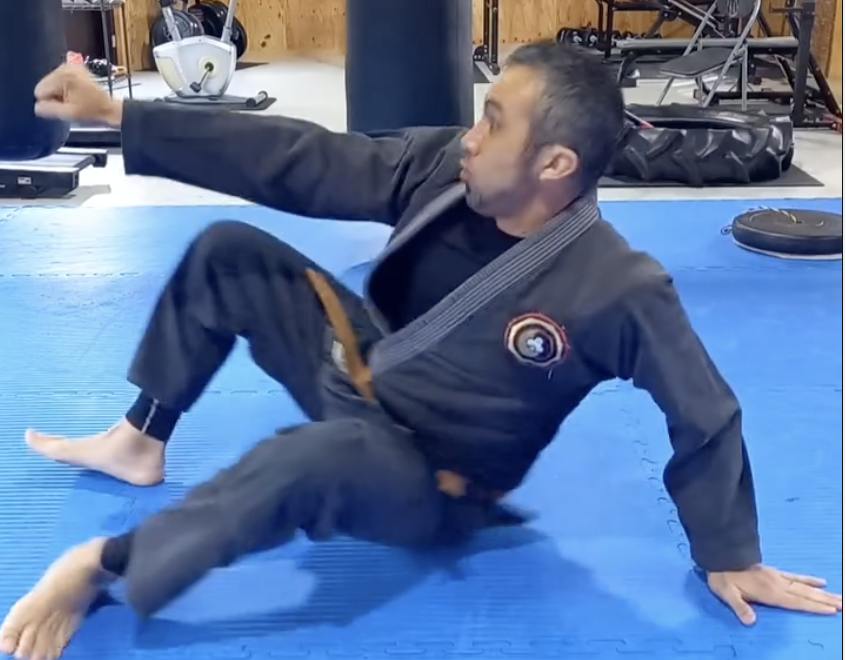
Butt scooting is a movement used by guard players and leg lockers sit on their buttocks and scoot towards their opponent. It is typically used to set up sweeps or leg entanglements like 50/50.
Instead of starting from the feet and engaging in the clinch, guard players will evade this exchange by butt scooting. This helps them avoid a potentially weak part of their game and go right to their strength on the mat.
They establish grips and get into position to launch various attacks.
Origins & Mechanics
Butt scooting is not new, but it gained prominence with the explosion of berimbilos, leg entanglements, and 50/50 during the 2010s. Some of the most notable butt scooters include the Miyao brothers, Mendes brothers, and Mikey Musumeci.
Most BJJ competitions, such as the IBJJF have formats that reward these guard sits if competitors can successfully use this approach.
Tutorials exist on “effective butt scooting” emphasizing grips, hip mobility, and creating angles for sweeps or entries. One common setup is establishing a cross collar grip with sleeve control as you sit and scoot into your opponent.
Why It Became A Joke
If you’ve ever seen someone butt scoot, you can understand why it became a joke. The optics are undeniably comical.
A grown adult sitting on the mat with legs spade, scooting after their opponent. When neither side wants to gauge it becomes both comical and embarrassing.
Throughout the internet there are numerous clips of exaggerated butt scooting racking up views with funny captions. The memes portray scooting as the epitome of BJJ’s perceived flaws: guard pulling, avoidance of real fighting, stalling, and prioritizing sports specific skills over combative ones.
In MMA or self-defense contexts, sitting on the ground while an opponent stands above you invites strikes, kicks, and not true self defense. Even within Jiu-Jitsu, guard passers and wrestlers mock this strategy as lazy and cheap.
Jiu-Jitsu champion Tye Ruotolo even joked that matches with butt scooters resemble an “ultimate scissoring championship” rather than a grappling match. Many grapplers and fans share this sentiment as prolonged seated battles and 50/50 stalemates are boring.
Has Butt Scooting Hurt BJJ?
There have been arguments made for both sides if butt scooting has hurt BJJ or not. There are some who feel that scooting is just another evolution of the sport.
There are many top grapplers who have effectively implemented this strategy into their games. It allows them to effectively pull guard and set up their attacks.
Many defenders of scooting also point out that the problem isn’t the act itself but passive stalling. Unfortunately, many top grapplers use this type of position to stall when they’re up on points and not engage.
They feel that this technique should not be dismissed as it ignores the evolution of the sport.
On the other hand, it has argumentally damaged BJJ’s broader appeal and reputation. Many new spectators see this act and feel that it is embarrassing.
It has also exacerbated the sport versus self-defense divide. BJJ is marketed as a practical self-defense system, but butt scooting isn’t street-applicable. The memes have also made BJJ into sort of a punchline.
A Balanced Perspective
Butt screwing is a symptom, not the disease. The real problems are passive play and over reliance on one facet of the martial art. Certain rulesets are also at fault for not incentivizing aggression.
Elite athletes have shown that butt scooting can be dynamic when paired with stand-up threats. A good example of this is Nicky Ryan and his proficiency at wrestle ups from a seated position.
Ultimately, the strength of BJJ is its depth. Butt scooting can be effective when mixed with various other attacks. The jokes are funny, but the movement won’t kill BJJ.


